
Assens Customs House serves as Museum Vestfyn’s venue for both exhibitions and activities throughout the year. Parts of the museum’s administrative staff have offices on the first floor.
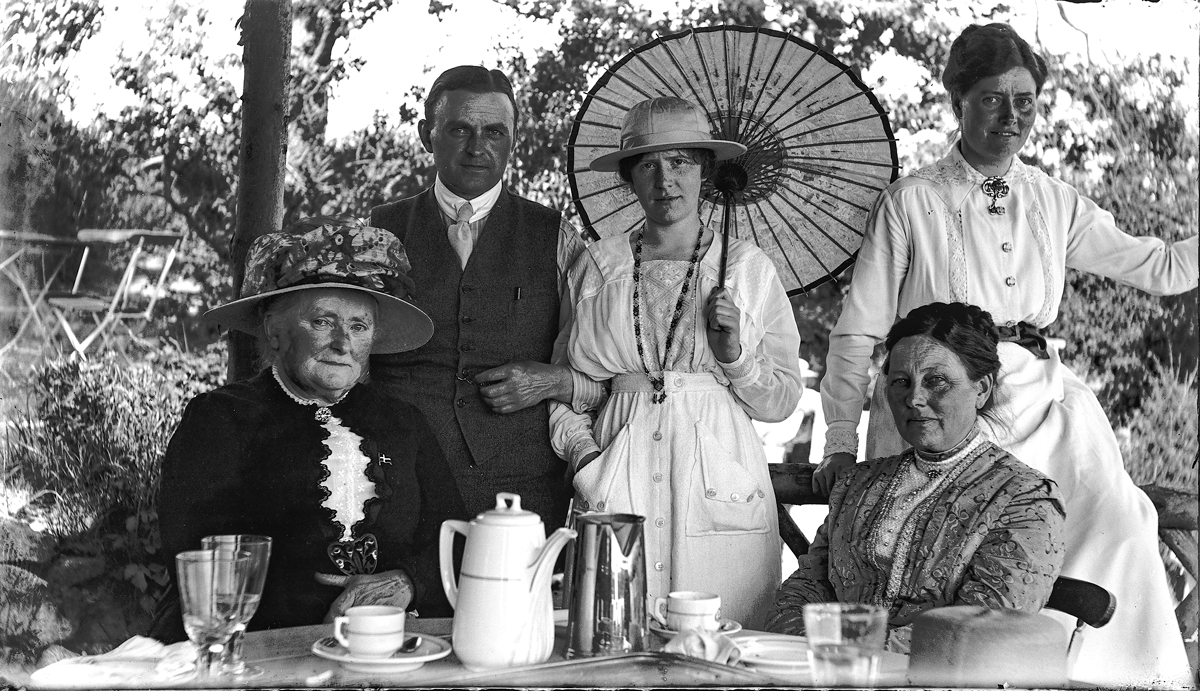
On the walls of the building's warehouse, you can see the photo exhibition "Assens Fremkaldt." The exhibition features large-scale reproductions of photographs taken by amateur photographer Otto Joachim Fiedler (1849–1936). Fiedler was a district and county physician and, not least, a skilled amateur photographer. With his camera, he documented the town of Assens and its surroundings. Fiedler photographed streets, buildings, people, and landscapes. The photographs offer a truly unique insight into the town—during a period of great change.
The Assens Customs House also serves as a venue for a variety of lectures and activities for children and families with children.
The History of the Assens Customs House
The Assens Customs House is home to many fascinating stories—some are hidden, while others you can touch and experience firsthand.
The building was designed by court architect and royal building inspector Jørgen Hansen Koch (1787–1860) and built in 1834.
The building served as a customs house until 1969, after which it was taken over by the Assens Seamen’s Association in 1972. In 2000, the building became part of Museum Vestfyn.
As you move from this oldest part of the building into the warehouse to the east, you’ll notice that the floor level is higher in the warehouse. This is a result of the building’s many flooding issues. In 1867, so much water flooded into the building that it subsequently underwent extensive renovation. The floor level in the warehouse was therefore raised to protect the stored goods during periods of high water.
In 1872, the water reached new heights once again. On the west-facing facade of the customs house, you can see a mark indicating the extreme water level. In 2023, the Little Belt once again overflowed its banks, and water seeped into the building. However, the water level did not quite reach the same height as in 1872.
The Assens Customs House was designated a historic landmark in 1978 and is a key feature of the historic Port of Assens, which has played a central role in trade and communication between Denmark and Germany. A customs office was established in the town in 1475. Although there are no traces of Christian I’s customs post in Assens, the Assens Customs House bears witness to the town’s history as an important customs hub.
The Assens Customs House was built just outside the market town’s western city gate and close to the town’s wharf, which was in use from the Middle Ages onward—now known as Midtermolen.
The Assens Customs House, along with other features at the Port of Assens, contributes to the story of Assens’s important role as a maritime trading town.