
Current Research
2026 – (ongoing)
Lesbian and Gay Liberation Beyond the Metropolis: Queer Lives and Politics in the Danish Province, c. 1965–1985 (QProvince), supported by the Danish Independent Research Fund (DFF).
QProvince examines queer life and politics in provincial Denmark from 1965 to 1985 and challenges the notion that sexual liberation originated exclusively in the city of Copenhagen. The project demonstrates how gay men, lesbian women, and other queer individuals created ways of life, communities, and political resistance in Danish provincial towns and rural areas—often quietly, but not without significance. By combining archival research, oral life histories, microhistorical analysis, and visual ethnography, QProvince uncovers both organized activism and the more discreet forms of everyday resistance: participation in local associations, home decor, relationships within the local community, and strategies for fitting in—or standing apart. The project contributes new insights into how queer lives have unfolded in local spaces and influenced broader social changes—often in ways that are overlooked in national historiography. By examining the provinces as an active and significant site in queer history, QProvince nuances established images of Denmark as divided between progressive cities and tradition-bound provinces. It offers new perspectives on sexual citizenship and fosters dialogue about cultural and political divides between the center and the periphery—both in Denmark’s past and present.
Project participants: Michael Nebeling Petersen (research director, University of Copenhagen), Niels Nyegaard (University of Copenhagen), and Tea Dahl Christensen (Museum Vestfyn)
2024–2026 (completed):
"Queer in the Provinces," supported by the Ministry of Culture's Research Committee (KFU)
The life and experiences of silversmith Frederik Ernst (1892–1976) as a gay man in Assens have provided the concrete, historical backdrop for this project, which has examined how queer practices have been performed and understood within their specific geographical and historical contexts. Queer practices are understood broadly and include same-sex relationships and gender-transcending social practices. *Queer in the Provinces* is the first study to place the analytical intersection between “queer” and “the provinces” at the forefront of a Danish context. Until now, Danish queer history has been explored with the big city as its starting point. The project has generated new knowledge about a part of Danish history we know very little about: queer practices in the provinces.
The project has been based at Museum Vestfyn, which in recent years has been developing the ERNST attraction in Assens into a venue that also showcases queer history. This initiative is inspired by the gay silverware manufacturer Frederik Ernst. The project’s objectives consisted, on the one hand, of the hyperlocal ERNST case—which, based on letters to the manufacturer, sheds light on cultural understandings of male homosocial relationships during the period 1930–1950—and, on the other hand, of expanding the field of queer history to generate new knowledge about queer practices in rural areas.
Project Participant: Tea Dahl Christensen (Museum Vestfyn)
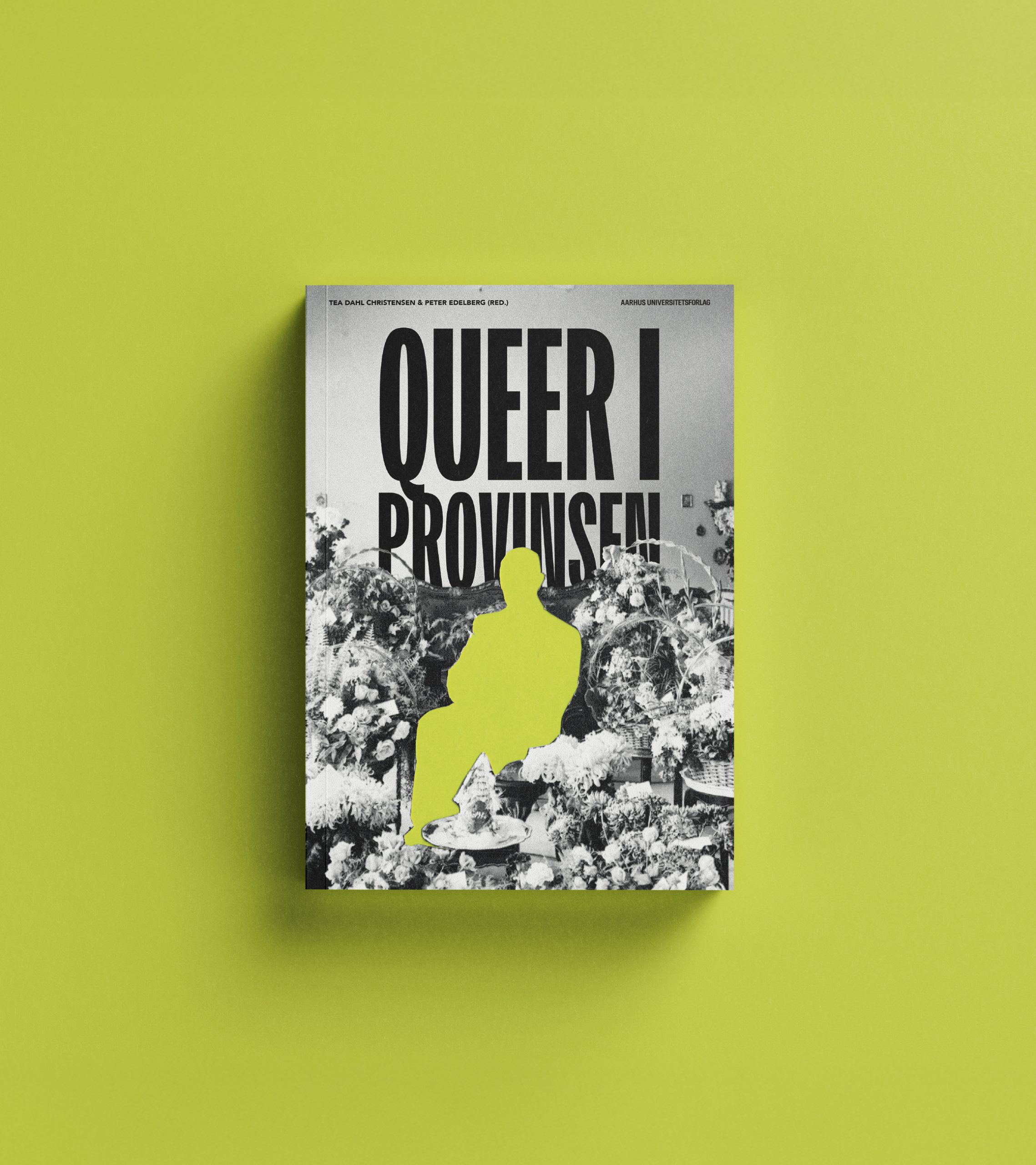
The overall project resulted in an anthology, *Queer in the Provinces*, featuring contributions from 13 leading authors and researchers in the field. The anthology was edited by Tea Dahl Christensen (Museum Vestfyn) and Peter Edelberg (University of Copenhagen). The publication was supported by the Research Committee of the Ministry of Culture and the Danish Tennis Foundation.