
Have a museum educator visit your class.
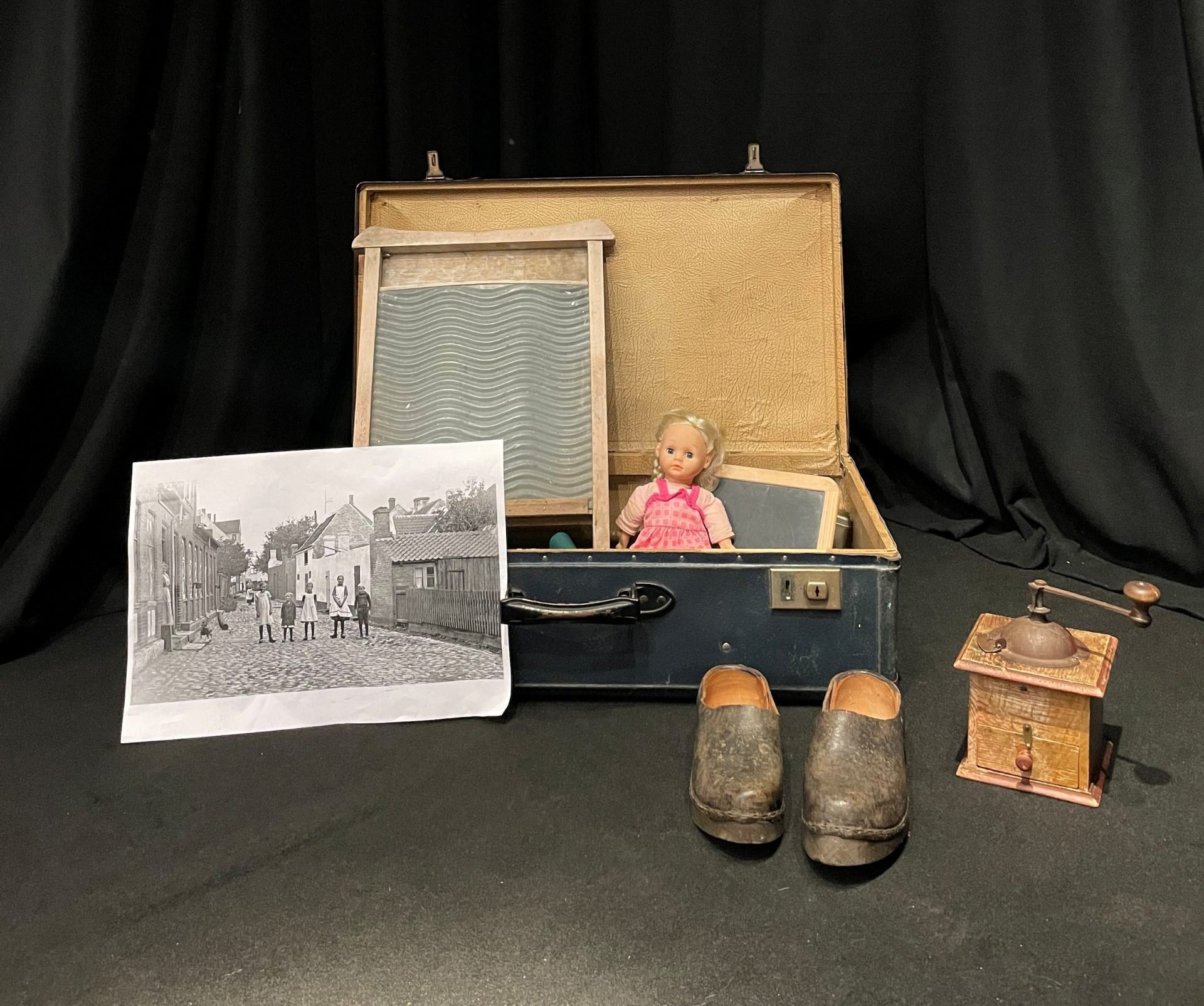
The facilitator has packed the history suitcase with objects used to describe what it was like to be a child in the “old days” (around 1900). The activity is based on a fictional story about a child and her family, drawn from historical knowledge. This introduces students to how objects can be used to tell stories. Students will have the opportunity to examine and explore the contents of the trunk, and we’ll also play a game from the old days. Along the way, students will be encouraged to compare their lives as children today with the lives of children about 100 years ago.
Learning Objectives:
- Foster curiosity about history, museums, and collections.
- Students learn to use objects as sources to tell stories.
- Students cancomparechildhood today with childhood around 1900 in general terms.
- Students practicequestioning techniques,collaboration, andstorytelling skillsthrough play and exploration.
Can be used in 3rd-grade history classes, where it can help students meet the learning objectives:
- The student can relate changes in daily life and living conditions over time to their own life.
- The student can use sources to gain knowledge about the past.
- The student can explain how people are influenced by and make use of history.
Can be used in Danish language classes and help meet the competency goals:
- The student can express themselves in writing, speech, sound, and images in familiar situations—by focusing on preparation and response
- The student can engage with familiar themes through discussions of literature and other aesthetic texts—particularly by focusing on putting them into context
- The student can communicate with an awareness of language and relationships in familiar everyday situations—through a focus on dialogue and physical expression/drama
WHERE: In the classroom; a museum educator will visit.
(Alternatively, this could take place at the museum if the class prefers. In that case, it might be possible to try some of the outdoor activities, such as stilts and hula hoops. And perhaps the exhibition at the Customs House could be used to better illustrate the context?)
WHEN: By appointment
DURATION: 1–1.5 hours (visit by the facilitator) + the class can continue working on the topic on their own (with suggestions for further work).
CONTACT: skoletjeneste@museumvestfyn.dk
Contact
To register or for more information, contact skoletjeneste@museumvestfyn.dk